2009-01-27

After Collision - Dusty Landscape

寄件者 MArch_Term 02

The landscape where the dust aggregate and form a lode of overlapping layers, the landscape of trace that is recording the after effect of the motion. The dust cloud start to collapse while the event of motion is over and degrade the falling particles to relocated on the surface, the geography of dust lode as medium for recording the phenomenological landscape that shifted by motion object in the event field, it’s also the dust generator while new event comes in, the everlasting covering of new dusted object and dusty landscape.

寄件者 MArch_Term 02

寄件者 MArch_Term 02

2009-01-26

During Collision - Trajectories of moton

寄件者 MArch_Term 02

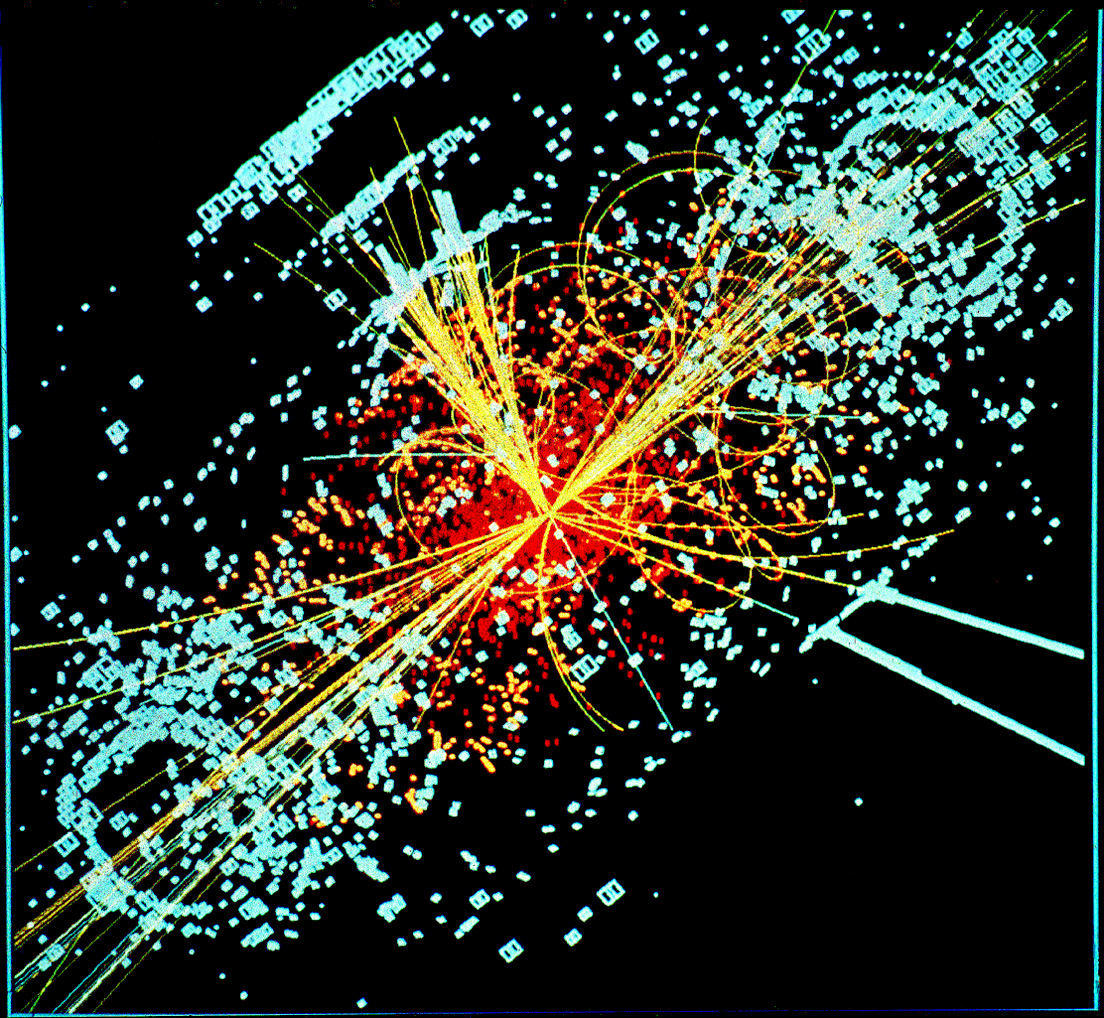
The collision particles images display the idea of the moton trajectories formed by collision which is triggered by impulses, the factors of activating object movement. The trajectories of the moton images describe the sudden moment of the event, the big bang of forming blurred space. It’s the space constructed without volume but with trajectories and point cloud. This progress is to describe the beginning of a blurred space by motion trajectories that projected by moton, the smallest bit of motion.

寄件者 MArch_Term 02

寄件者 MArch_Term 02

2009-01-24

The Occuring - Dust Vessel

寄件者 MArch_Term 02

The blurred space reveals when the object is in motion, and the dust particles altered and scattered during the movement. The particle trajectories and the point cloud forms the space of blur, it’s continuous shifting and oscillating during the motion, the un-static factors and conditions that flows the dust around, the dust cloud that surround the boundary of the blurred space. The idea is to wrap the dust cloud into a vessel by trapping the particles inside a thin gap space, the studies of translucency of the blurred space, the en-even distribution and inflation, the motion fold of the creased surface.

寄件者 MArch_Term 02

Dust Collider Lab

寄件者 MArch_Term 02
寄件者 MArch_Term 02

寄件者 MArch_Term 02

2009-01-22

Friendly Fires ‘Skeleton Boy’ by Clemens Habicht


Friendly Fires 'Skeleton Boy' by Clemens Habicht from Nexus Productions on Vimeo.

2009-01-21

test on Particle Drawings

寄件者 MArch_Term 02


寄件者 MArch_Term 02

寄件者 MArch_Term 02

2009-01-19


The Moton:
Derives the idea of monads and look into the moving object, the smallest indivisible matter of motion, the Moton, the particles that consist in the motion. It’s the hidden substance for depict movement within the space, all moving object consist the Moton that is triggered by “impulses”, the energy that arose the object matter into motion condition. There is always a small bit of something that describe the whole universe, for instance, the atom describe the characteristic of the material, the monads describe the soul of matter. I’m looking into the space of motion, the occluded blurred space object, what would be the small bit of something inside the blurred space object? Two of the indivisible particle can be composite as the smallest bit of motion object, the dust, consist of Moton and monad, one is the simple matter of motion, one is the soul. These two become the most tiny compound substance, the substance that can be evidence to trace the phenomenon and the accident during a movement.


The Dust Collider
Collider has been used to discover the unknown particles in the universe, the method of collider is using high energy to accelerate compound particles into approximate speed of light, the maximum speed to create the massive amount of energy during the collision. The method of discovering the quantum physics is the detector for capturing the “trajectory” of the particle moving, the data for further studies and the evidence of the existence of the unknown particle. The principle is simple that it will never see a particle directly, but shows where it has travelled, what signature tracks it leaves behind and the effect it has on the detector when it is stopped as it flies out of the collision (Particle Physics). In this term, the dust collider for this project is the experiment on the trajectories of the dust particles, and finding the small bits of new vectors of Moton during the collision by using projection photographic techniques to capture and imaging the appearance of the Moton in the space.

Moton - smallest bit of motion

The smallest indivisible part of motion, Moton (Motion+Atom), that is trigger by impulses.
The dust is the compound particle composed by Moton and Monad, as the smallest bit of motion object.
The debris substance (Dust) fall off from moving object while in motion contain the smallest movement of object, looking into the instant moment when the light sweep the dust is the moment when occluded object is revealed.

Moton, the idivisible part of motion.
Impulses as energy of triggering Moton, the motion.
Dust as smallest particles of motion object.
Dust cloud is the trajectories of the object.
Dust map is the weather map of phenomenological landscape.
Dust book is the data storage of the map
Dust house is the place where motion object travels.
The bunker is the method of trapping occurred and occurring, actual and projected as the motion fold, I named it BUNKERED.

2009-01-18

The Dust and Monad

In the “Plenum” which describe by Leibniz is that the world of matter, everything is full…all matter is interlinked…any movement must have an effect on distant bodies. Derives from this idea we can look in to the event field, the field of happening in the space that always interlinked with the phenomenological landscape, any motion must have an effect on object or space. The effect that alters the something while moving, the small bits of the substance that fall off, the trace that compose of dust.

The Dust
Dust, a little bit of something, the idea of simple substance can refer to Leibniz’s Monad, something that has no parts...the true atoms of nature, and he describe the only way of Monads to begin or end is instantaneously being created or annihilated all at once. Derive from this and look into the phenomenon of the “instant” event that occurred when object moves and the dust which fall off is the method of revealing the in between space of actual object and recorded trajectories , the instant moment where the dust of small matter aggregates as a dust cloud, the “body” of occluded object exist between motion, the body that express the property of blurred space through interconnection of matter in the “plenum”, the medium of revealing the interconnection of the motion object and the landscape.

The Dust Lodes
Parts of matter are masses or aggregates, as corollary to the compressive elastic force, which Deleuze describe the smallest element of the labyrinth is the fold, an extremity line that there is always a fold within a fold. We could combine the idea of smallest unit of fold and the Monad as the composite elements for describing the shifting between motion object by looking into the particles twisted into folds and a contrary effort changes. Moreover, from Deleuze mentioned about the solid creases of natural geography, the landscape that layering followed by the complex interaction system of the earth, the “lodes” in the phenomenological landscape where the lodes of dust describe the event field as a section map, the place where time space collapse and overlapped during in and out the event.

Method of Constructing Project

The Pollock’s Table – the surface of dust
We find the work of Pollock using a line of infinite inflection which works on a surface, which Delluze’s describe his work as the surface that no longer a window but becomes an opaque table of information…the table on which are inscribed lines, numbers, changing characters. It’s the idea of a place where moving object inscribed the line on the dusted table, the line as the trace on the dusty landscape, the “manuscript” of the object matter, and during the continuous event on the field, the overlapping dust layer become a dust lodes, the covering define of the figure more than by their contour. it is the partial archeological table of the space that describes moving object.

The Leibniz’s Dark Room – the developing of dust weather map
The point of Leibniz’s monad is that it’s a background, and it draws everything from this, nothing goes in and out, the purely description of the instantaneous moment of the object moving. The dust in the room aggregates as the accident occur, where a space has only a small, high opening when the light enters and passing through mirror tilted and project the unseen point clouds of dust on the wall. The wall as a negative film of photo for capturing the shadows of the dust cloud, the dark room that is developing the weather map of the dust.

The monad Book – reading dust map as “emblems”
Monadology describes “He who sees all could read in each everything that happens everywhere and even what has happened and will happen…” The monad book is the space where folding the dust map through visible and legible process, the combination of these two constitute the “emblems” of the space, the symbols for the observer to read by using the wind as the power for compiling the dust map, stem from Delluze notes about the fold is inseparable from the wind. Ventilated by the wind, it is no longer the fold of matter through which one sees, but the fold of the soul which one read. The book for concentrating and compressing the weather map of the dust, the space where time space of event field was frozen and documented.

2009-01-14

The Unobserved Landscape in the Dirty House

寄件者 MArch_Term 02

Architectural Program

Following from previous studies, the blurred space is a space that exist both occurred and occurring trajectories of the moving object, and the place where time space overlapping between these two. The landscape that altered by the moving object as a phenomenological landscape is a space of event field, where the moment of the object oscillating the geometry and left behind a trace which consist the vectors of the particles, such as the ball that hit on the sand that makes a concave on the land and the sprayed sand particles that scattered around the bunker, the dusty landscape that reveal the event on the field.

The idea of bunker which is the space of the trace is an after effect of overlapping the time space trajectories which left on the landscape as a recollection of the field event, and the trace is part of the substance of the landscape and it continues overlapping, such as the foot print that might be stepped on twice, the trace itself is an second order phenomenological landscape, and it’s the nesting space between the gap.

In Hannah Holmes’s word, “every time you inhale, thousands upon thousands of dust particle swirl in your body”, the dust which described as a little bit of everything on the planet, the unobserved particles of materials that is covering and forming the unseen landscape around the object in the space. Dust is unavoidable and is the tiny substances that is sensitive and scattering all the time, the slow time matter of development that we couldn’t sense it through our human perception, but it is a drastic motion for particle itself of shifting in the micro scale.

While opening the door, the vibration of the door disturb dust falling from above, the dusted door handle we touch and scratch, the dust surface wipes off. While the door slightly opened, the light infiltrating into the house through the tiny seam of the door that sweeping the dust to a point cloud, the revealing of the moment of the event, the door opening, with projected shadow of the clouds, the volume light, and the occurring forms of phenomenological landscape, the falling dust). By looking into this, the dusted object that travels around the space spilling off particles and form a new dusty landscape, it’s a series of event related to vectors, speed, time, vibration, the factors that trigger the motion of dust particle, the trace of the event which is the dusty landscape.

The program of this project is to reclaim dust as a medium or material for amplifying the event field of a space by constructing the unseen landscape of an architectural space, a dirty house full of dusty landscape and dusted object.

Design Tactics

Following the previous study of the capturing the motion object, the tactics following up are 1.Collecting 2.Locating 3.Reconstruting

The Dusted door
The dusting door is a system of revealing the event that has been amplified with it’s actual and recorded trajectories of the object and the after effect that forms the dusty landscape, and the overlapping time space due to the daily usage of the architectural element, as an archeological doorway.

The Door handle:
The handle that traps the falling dust by the static electricity of the metallic materials, the dust then whip off when hands touch and left the trace on the surface, the handle is also the electricity generator by using the friction while turning, the trigger that turns on the door bell and the light above the entrance.

The Entrance Light:
The elements of emitting light particles for sweeping the dust falling and shimmering the particles as dust cloud, the projection of the dusted object and the man opening the door on to the floor as shadows.

The Door Bell:
The bell that informing the happening of the event, the metallic bell covered with fabric fiber that could collect the dust around the air. While the bell rings, the shell of the bell vibrates and shakes of the dust on the surface then falling to the ground, as a generator of the dust.

The Door:
The door that fixed with a small wheel underneath the panel, the wheel that scratched the floor which is covered with dust on the surface, the scratching event that wipes over the dusty landscape, the trace of the door movement superimposed with the shadows of the dust clouds, the moment when the hidden blurred space is exposed.

2009-01-12

Dusty Phenomenological Landscape


Dust : the altered spreading substance particle from object

The idea of the overlapping recorded and actual trajectories, the space in between which is the “Blurred space”, consist of these two, the past differentiated moment and the continues occurring within a timeline.

The phenomenological landscape is the event field that is oscillating due to the interference of factors (wind, golf ball, rain..ect.) that altering the geometry of the landscape (the geography of the land), during the event of the interference that occur the blurred space to reveal.

The trace is the after effect of overlapping the time space trajectories which left on the landscape as a recollection of the field event, and the interesting part is that the trace is part of the substance of the landscape and it continues overlapping, such as the foot print that might be stepped on twice, the trace itself is an second order phonological landscape, and it’s the nesting space between the gap.

Now is the program of what this issue can link to architectural space, I’m thinking of what do we need this trace of documented phenomenon for? It might be the observatory, the club house of the golf course as part of the observatory, the observatory that nesting and collecting the information from the event field (the bunker, the tee…etc.), the dust particles as medium of quantity, the noise intensity as medium of quality, the mixing particles and noise as the constructing elements of the club house as 2nd order of the phenomenological landscape, the dirty(dust and noise)house of trace.

2009-01-11

James Turrell - Light & Space


He is best known for his work in progress, Roden Crater. Located outside Flagstaff, Arizona, Turrell is turning this natural cinder volcanic crater into a massive naked-eye observatory, designed specifically for the viewing of celestial phenomena. His other works usually enclose the viewer in order to control their perception of light; a James Turrell skyspace is an enclosed room large enough for roughly 15 people. Inside, the viewers sit on benches along the edge to view the sky through an opening in the roof. He is also known for his light tunnels and light projections that create shapes that seem to have mass and weight, though they are created with only light. As a lifelong Quaker, Turrell designed the Live Oak Meeting House for the Society of Friends, with an opening or skyhole in the roof, wherein the notion of light takes on a decidedly religious connotation. (See PBS documentary).

His work Acton is a very popular exhibit at the Indianapolis Museum of Art. It consists of a room that appears to have a blank canvas on display, but the "canvas" is actually a rectangular hole in the wall, lit to look otherwise. Security guards are known to come up to unsuspecting visitors and say "Touch it! Touch it!"

Turrell's works defy the accelerated habits of people especially when looking at art. He feels that viewers spend so little time with the art that it makes it hard to appreciate.


2009-01-09

Land Art - Christo and Jeanne Claude

Christo and Jeanne Claude: ‘Running Fence’


Running Fence, 5.5 meters (eighteen feet) high, 40 kilometers (twenty-four and half miles) long, extending East-West near Freeway 101, north of San Francisco, on the private properties of fifty-nine ranchers, following rolling hills and dropping down to the Pacific Ocean at Bodega Bay, was completed on September 10, 1976.
The art project consisted of: forty-two months of collaborative efforts, the ranchers' participation, eighteen public hearings, three sessions at the Superior Courts of California, the drafting of a four-hundred and fifty page Environmental Impact Report and the temporary use of hills, the sky and the Ocean.
All expenses for the temporary work of art were paid by Christo and Jeanne-Claude through the sale of studies, preparatory drawings and collages, scale models and original lithographs.
Running Fence was made of 200,000 square meters (2,222,222 square feet) of heavy woven white nylon fabric, hung from a steel cable strung between 2,050 steel poles (each: 6.4 meters / 21 feet long, 9 centimeters / 3 1/2 inches in diameter) embedded 1 meter (3 feet) into the ground, using no concrete and braced laterally with guy wires (145 kilometers (90 miles) of steel cable) and 14,000 earth anchors.
The top and bottom edges of the 2050 fabric panels were secured to the upper and lower cables by 350,000 hooks.
All parts of Running Fence's structure were designed for complete removal and no visible evidence of Running Fence remains on the hills of Sonoma and Marin Counties.
As it had been agreed with the ranchers and with the County, State and Federal Agencies, the removal of Running Fence started fourteen days after its completion and all materials were given to the ranchers.
Running Fence crossed fourteen roads and the town of Valley Ford, leaving passage for cars, cattle and wildlife, and was designed to be viewed by following 65 kilometers (forty miles) of public roads, in Sonoma and Marin Counties.

extract from http://www.christojeanneclaude.net/rf.shtml

2008-12-11

Term one Crit

寄件者 +Term one Crits

第一學期的評圖在今天宣告結束,也是迎接聖誕假期的開始,心情是開心呢? 我也說不上來,一方面可以放鬆一下,不用在天天跑系館,一方面是突然生活失去了重心,明天要幹嘛? 不再是八點起床、八點半吃完早飯準備午餐便當,九點出門到系館,工作到晚上十點騎腳踏車回家,十一點吃完晚餐,十二點睡覺,我過這樣軍事般規律生活一個多月。現在算是告一個段落準備迎接第二學期新的開始,有趣的是,設計沒有做完的一天,我躺在床上仍然想著一些我的題目該怎麼繼續發展的可能,因為這只是我一年碩士生活的三分之一,雖然這兩個月已經像是以總評的心態在衝刺著,但之後的兩個學期只有更忙碌、更需衝刺、更多壓力,在這之前我就好好放個最後的假吧。

至於評圖進行得如何? 我的時間從我Present到講評只花了13:50,算是我有史以來評過最快的一次,不知道為什麼,第二天的老師都很安靜,像在趕進度一樣一下就結束了。當然少了砲火也少了講評與建議,也許是因為我的工作量夠,老師們看到覺得沒什麼問題,就希望我繼續發展下去,期待看到有趣的作品,就這樣很快的結束了。很可惜的少了一些對話的機會,這樣算是評的好或不好,我也說不上來,但大家都說老師口頭的稱讚工作狀況非常好算是評的很好的了。anyway,明天就會看到講評的內容了。

第一次在巴特雷正式的評圖就這樣落幕,緊接著第二學期又是全新的開始嘍,這學期算是暖身(雖然我覺得我已經很賣力的跑了),但第二學期是真的要衝刺設計的時候,希望我還能保持這樣的狀況工作下去,主要還是那想要做設計的慾望跟熱情,這才是永恆支持自己的力量。

2008-12-06

Text

Constructing the blurred space object
The progress of experiment is now move forward into a new system, the running golf ball in the woods, it’s an experiment on architecture language as algorithms that dealing with location, trajectory, landscape shift, extracting the event locating in the golf course to discover the geometric relationship between moving object and the trembling landscape, and the possibility of reconstructing the trajectory of the movement of an object as 2nd order geometry that is outside itself. Next step is the projection of the 2nd order geometry onto the 1st order geometry to networking the two geometry dimension, and filling the gap of 1st and 2nd order, as construction of the blurred space object.

The tactics will take part in 5 phases:

A. Locating the object’s position
A set of system that dealing with locating the moving object to define the position from one point to the other, the different timing of the location, and the vectors of the object.
The Tee: by locating springs underneath to sensor the weight of the golf ball, and the vibration of the ball hitting by a club, which trigger the gear bar to move up and down that indicates the location of the ball.
Tee Calibrating Member: the member that calibrates the height of the tee by adjusting the different locking position due to the golf ball location.
The Crane: powered by the amount of the rain stored in the rain tube that fixed with pulley and cable. When the tube filled with certain amount of rain, it pulled up the ball from the storage and flick up to the vessel located on the air.
The Loader: the ball loader that fixed with spring in-between the main structure could measure the quantity of the ball and drop one ball at the time. the adjustment on both side could calibrate the width of the vessel that could sort the ball.

B. Measuring the landscape shifts
The system for measuring the shifting geometry from the landscape that oscillate by the object, and the vectors of particles from the creased and trembling landscape, the trace left behind by the object.
The Sand Trap: the device that dealing with the collision of the golf ball hitting the sand and changes the landscape. Collecting the sand particle by the pocket powered with wind that document the amount of the sand and trigger the pin to make the sound.

C. Documenting vectors of object and particles
A system for collecting the vectors from the moving object and the landscape particles, the feedback information from the locating system that comes into this vector field storage.
The Sound Cocoon: the cocoon is a device for documenting the collision of the ball hitting on the sand, the time and the vectors of the object and the sand particles that makes the sound through the sand trap device, and the place storages all the sound that happens in the golf field as a archeological time capsule.

D. Reconstructing trajectory
While we gather the location and the vectors of the object and particles from the creased landscape we can reconstruct the trajectory by integrating all the information.
The Projector: attaching the lens to gather the sunlight on the sand trap system to project the sequential images of the ball descending from the air to the ground onto the ball surface and the landscape, the ball that carries the past vectors of itself and integrate through time as a trajectory, and the trajectory of the particles as the notation of the collision event.

E. Layered the blurred space object
The blurred space object is the networking object between 1st order and 2nd order geometry, the gap filling object that exist in blurred space, it contains not only the present geometry but also the past traces that left behind and the trajectory as the future movement. The object that made of the images of the trajectory through time and the sound of the fold and crease of landscape shifting.

The golf ball: locate a microphone inside a golf ball that could pick up all the sounds that collected from the sound cocoon, the information of the shifting landscape vectors and the vectors itself. The reflexive coating of the ball imprint the landscape from the ground which collages with the projected trajectory on surface, the idea of revealing the blurred space object.

2008-12-03

The TEE 19th

寄件者 MArch_Term 01


寄件者 MArch_Term 01

寄件者 MArch_Term 01

寄件者 MArch_Term 01

2008-12-01

Modeling...

寄件者 MArch_Term 01

A long progress of 3d modeling, not yet with materials, still a lot of bunch to go.

2008-11-23

The running golf ball in the Woods

寄件者 MArch_Term 01

Imagining when the golf ball running through the woods, hitting the falling leaves, the alien golf ball that interrupt the original parameters, how the system calibrate and migrate itself that could merged two running system in a space. The system of golf playing is also a series of event that related to landscape conditions, the one that could observe the golf ball running and moving around the course, the enquiry about how a system running upon another system or how the one effect of influence the other. This leads to think about how the falling leaves system can calibrate and integrate into the golf course when a new event comes into it, this idea can move forward toward the relationship between object and space, how the space condition are when everything is shifting and moving, and different events are interweaved all time.

in the woods = a forest and as a code of golf player Tiger Woods

2008-11-22

The Delicate Touching

寄件者 MArch_Term 01

Adapting the leaves motion capture system in to the site, a park near the Bartlett, with the great condition of flashing sunlight, it's interesting to see the model merged under the leaves landscape, the cutting edge with burned marks and colours match the site with dry leaves on the ground, looks like the device grown from the underneath of a tree root, sticking out the small legs that observing and sensoring the falling leaves, and itself walking around the landscape enjoying the delicately touching of the leaves. It submerged and appeared, it hidden behind the root and curiously pops out the ground, it walks and dances in this lovely autumn morning.

寄件者 MArch_Term 01

2008-11-21

Drawings_03

寄件者 MArch_Term 01

2008-11-20

Drawings_02

寄件者 MArch_Term 01

Drawings_01

寄件者 MArch_Term 01

Finally some progress of fine drawings for the review next week, it's getting slow and need to catch up for the later 3D modelling and layout.

2008-11-18

Sketch_The Tee 19th Golf Course

寄件者 MArch_Term 01

寄件者 MArch_Term 01

寄件者 MArch_Term 01

The system of my previous work now introduced with another system, the system of golf playing as a series of event that also related to landscape conditions, a system that could observe the golf ball running and moving around the course, the enquiry about how a system running upon another system or how the one effect of influence the other. This leading me to think about how my falling leaves system can calibrate and integrate into the golf course when a new event comes into it, this idea can move forward toward the relationship between object and space, how the space condition are when everything is shifting and moving, and different events are interweaved all time.

2008-11-16

Mark Rothko

Mark Rothko, Untitled,1945-1946, National Gallery of Art, Gift of The Mark Rothko Foundation, Inc., 1986.43.175

Biomorphic forms dance before a background of horizontal bands that resemble the layers of a submarine universe. Luminous and transparent, Rothko's watercolors of this period mark a turning point in his career.

For me I think it's where getting boring, although the deep layered of the painting is appreciable, but just a way too simplifying the paintings itself, what makes diffrences when everything is black or two layered black?


Cildo Meireles


"My work aspires to a condition of density, great simplicity, directness, openness of language and interaction."~Cildo Meireles
A key instigator of Conceptual Art, Brazilian artist Cildo Meireles has made some of the most politically telling, aesthetically seductive and philosophically intriguing works of the last four decades. With a characteristic economy of means, he distils complex ideas into single objects or environments.
Meireles was born in 1948 in Rio de Janeiro, where he still lives and works. His father worked for the Indian Protection Service and, as a boy, the artist accompanied his family on their constant moves throughout the vast Brazilian territory. We often catch glimpses of these childhood experiences through his art.
His work inherited the legacy of Neo-concretism, a Brazilian movement of the late 1950s that rejected the extreme rationalism of geometric abstraction in favour of more sensorial, participatory works, which engage the body as well as the mind. The utopian optimism of the Neo-concrete artists foundered after the coup of 1964, which ushered in an oppressive military regime.
Meireles’s generation, emerging in the late 1960s and 1970s, were known for more politically engaged works, the extremity of their actions mirroring the extreme political situation. Meireles himself, however, links these two strands of Brazilian art.‘In some way you become political when you don’t have a chance to be poetic. I think human beings would much prefer to be poetic’, he explains.
As Guy Brett, co-curator of this exhibition, has said, ‘A work by Meireles often starts in a commonplace, usually domestic object, or a childhood memory, which becomes transmuted into a perceptual, philosophical, even a cosmological speculation, without, however, losing its grit, its roots in social reality – a reality often harsh but marked by human resilience and inventiveness.


2008-11-13

About Cybernetics

Extract from Cybernetics and Second-OrderCybernetics by Francis Heylighen
Cybernetics is the science that studies the abstract principles of organization in complexsystems. It is concerned not so much with what systems consist of, but how they function.Cybernetics focuses on how systems use information, models, and control actions to steertowards and maintain their goals, while counteracting various disturbances. Being inherentlytransdisciplinary, cybernetic reasoning can be applied to understand, model and designsystems of any kind: physical, technological, biological, ecological, psychological, social, orany combination of those. Second-order cybernetics in particular studies the role of the(human) observer in the construction of models of systems and other observers.

The Idea

寄件者 MArch_Term 01

Shifting Vectors of Landscape Condition as Cybernetics System
My main idea is concerning about the shifting vectors of the landscape, the conditions in the space that altered the object's position and movement as a series of events oscillating the landscape. My system is based on the shifting and non-static coordinates between object and space, the blurring territory of trace left behind in between the time, this complex system is a tactic for rejoicing the paradigm of architectural language. A tactic could adapted to a programme for architectural space and a way of exploring and experimenting idea, an algorithm as part of cybernetic system.


以景觀狀態的變動向量關係談論控制論系統
這個設計主軸在於討論空間中變動向量關係,以景觀狀態變化為出發點來探索與試驗這空間語法系統。空間中的狀態與條件會改變物件位置與位移關係,位移之中空間狀態也在改變,就是所謂不斷變動的景觀,在這樣一個複雜與非安定的座標中,討論物件與物件、空間與物件中間那模糊的邊界,那物件遺留下來的變動痕跡,一個事件系列彼此間牽動與擾動空間。這個思考方式是在重新打破建築規範語言,一個複雜多元的系統來探索想法,建立一個演算法則或空間語法來做為控制論中的一部分,一個可以重新翻轉建築方案的解讀方式。

寄件者 MArch_Term 01

2008-11-10

Time Scripting System

寄件者 MArch_Term 01

A scripting system based on the falling event of leaves from the tree to the ground, a whole sequence of related field events within the object and the space, the idea is to documenting the movement from air to ground as a time system, the wings waving in the wind and capturing the leaves into the vessel, the place where leaves dryout due to the humidity and temperature then drop into the wieght scale that operate by the spring, while the whole journey was a time-based event that manipulate this time measurment system.

一個時間撰寫系統,透過一系列落葉從樹上掉落地面的連續事件中,試圖利用一個系統來記錄過程,一個物件與空間變動關係的系統,利用風吹動翅膀來捕捉落葉,落葉先掉落在第一個艙體裡,一個靜待條件轉換的空間,落葉因為氣溫、溼度漸漸變形扭曲,縮小的體積穿越到第二個艙體,一個可以量測重量的裝置,當落葉累積使得重量數值變化,一個由事件轉成質量再轉成時間刻度的閱讀系統。


寄件者 MArch_Term 01

2008-11-09

Exb_Seizure-Roger Hiorns

寄件者 Exb_Seizure-Roger Hiorns
ROGER HIORNS
SEIZURE
British artist Roger Hiorns makes exceptional use of unlikely materials: detergent, disinfectant, perfume, fire and copper sulphate crystals. Transforming steel poles, car engines and cardboard architectural models into crystalline forms, Hiorns effects surprising, physical and aesthetic transformations on found objects.

In SEIZURE, Hiorns' most ambitious work to date, the artist precipitates an unexpected sculptural form within the fabric of a housing estate near London Bridge. Architecture and modernist sculpture continue to be important touchstones for Hiorns' work, and both have strongly informed the development of this major new commission. For his first work within an urban site Hiorns' makes a radical shift of scale and context, and has developed an extraordinary chemical intervention in the heart of the city.

寄件者 Exb_Seizure-Roger Hiorns

寄件者 Exb_Seizure-Roger Hiorns

2008-11-06

Colour Scripting System

寄件者 MArch_Term 01

The scripting system comes from the idea of seasonal colour changes of leaves, the colour is the reflection of the light wavelengh, the climate altered the chemical reaction and effect the colour. Colour is a part of transitional script of the weather condition, it illustrate the shifting, and the blending colour of all kinds. A very rough idea of extracting the parameters of the weather into a colour printing devices that mixes the CMYK due to the changing condition, a scripting by printing.

一個顏色編撰系統,來自樹葉改變顏色的狀態,顏色只是物體反射光線的波長,所以是一種化學變化造成數據改變因為氣候變化,所以顏色的轉換轉譯了環境條件轉換,一個很直接的想法是擷取這樣的想法成為一個CMYK印表機,一個可以因為溫度、濕度、風、空氣而噴出墨水的系統,一個可以轉換無形的因子成為有形的圖像。


寄件者 MArch_Term 01

A synthetic scripting of shifting landscape

寄件者 MArch_Term 01

The idea of micro landscape scanner flipped through when accidental presented upside down, the meaning chages and becomes a whole new programme and triggered another possibility, which leads to a new system of leaves catching with trajectory tracing and condition observer of the sequetial falling leaves event, such as the gravity and the wind, the journey of the leaves from air to ground. Phil suggets two system could be also add into the idea, one with crushing lanscape like a shoe, and one in the sky, a synthetic programme of shifting landscape on different scale through weather conditions or environmental parameters, the bluring territory between human and nature.

這個記錄微距景觀的系統在翻轉鏡射之後變成全然新的可能,意義改變、作用改變、一個捕捉落葉旅程的工具,因重力從樹上掉落、因風力轉向、因氣溫扭曲,一個序列景觀轉變的記錄系統。老師建議可以再引入兩種系統,一個是景觀的擠壓關係,像是我們鞋子踩過落葉的瞬間,一個可能是在天空中的系統,所以我有一個全面性的景觀記錄工具,一個在地底、一的地面、一個地面之上,之後這些用來探索人與環境之間模糊的領域可能會是什麼。

2008-11-03

Model Making

寄件者 MArch_Term 01

The Procedure of model making by 2d cutout drawings, the contour section pieces are the unfolded expandings of the object, the in-between slices are the bluring spaces which refer to Derrida's idea of trace, the mark on both in the future and in the past, the individual cutout has the hidden relationship of whole peice, which is also the idea from Differential and Intergral function, that each of the "solution" is the section of the graph. Expand this idea toward my enquiry of trace, the time of "now" is the section of "present", the still image we saw. Looking toward the blur space as time territory of "present" which the hidden dimention are the lofting space that last in-between of now and next now.


2D連續剖面呈現3D立體模型的技術是一個關於微積分的觀念,微分(剖面)積分(剖面集合),當切分越來越細時則會接近原始物體,有趣的是即使是無限細分中仍然存在著剖面與剖面中間的"空白",這個空間到底是什麼? 回歸到徳希達所提出的"痕跡",痕跡是遺留在同時過去與未來中的記號,我將他解讀是一個跨越時間平面的物件,它必須同時存在兩個時間,一個德勒茲時間摺疊中才可能出現的,這個模糊(Blur)的痕跡空間會是什麼? 如果將這觀念來重新解讀時間,現在(present) 是相對過去(Past)與未來(Furure)夾集的領域,是相對定義的而無法絕對定義,如果是這樣現在是一個非線性的空間,因為每個物體有自己的時間軸,當下(Now) 則是現在(Present)的一個剖面就是所謂的單一線性時間,所以我想要觀察的Blur就是這個present下的空間,我所關心的是如何在這個現在中去擺放一個設計,當所有的物體都有自己的時間軸這麼複雜的系統中。

寄件者 MArch_Term 01


寄件者 MArch_Term 01

Sketch_Landscape Observatory

寄件者 MArch_Term 01

A leaf landscape observatory that can record the fluctuating vector of the leaf, the vector that altered by the temperature, humidity changes of the weather, a time-based event that caused the shifting of micro landscape. The LEGS matrix are the devices for sensoring the small horizontal drift and the NEDDLES are for vertical movement.

落葉的景觀記錄器用來偵測樹葉的微小變化,因為氣溫、溼度等等氣候因子使得樹葉會枯萎、蜷曲、萎縮,這每一個樹葉節點是反應這一個時間事件中微觀世界的景觀變化。物件中的LEGS與NEDDLES用來分別偵測水平與垂直的位移。

寄件者 MArch_Term 01